

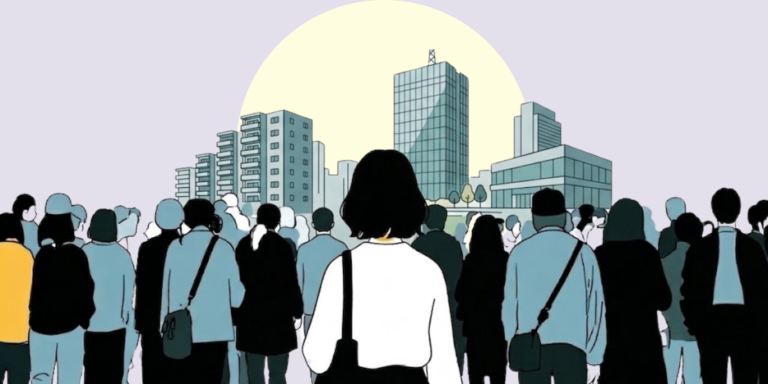
Not everyone inside a scam compound arrived by deception. Scam compound workforces are composed of both trafficked victims and complicit individuals, with criminal groups leveraging this combined labor pool at an industrial scale, driving operations that now span more than fifty countries and generate tens of billions of dollars in annual losses.1 Yet the boundary between these two categories, victim and perpetrator, is not a fixed line. It is, by design, a continuum that criminal systems actively blur, exploit, and reproduce.
The psychology of complicity rarely begins with a conscious decision to cause harm. It begins with a small compromise, one that feels, in the moment, like a necessity or a matter of survival. Financial strain reshapes how ethical decisions are made: abuse of a position of vulnerability is among the most common means used to traffic persons into forced criminality, alongside deception, coercion, and blackmail. When basic needs or family welfare feel threatened, attention narrows. Actions that would otherwise feel unacceptable get reframed as necessary sacrifices, not because a person has become unethical, but because fear and desire have been amplified while moral restraint is temporarily weakened.
Ethical flexibility under economic stress explains how this happens and why illegal or exploitative work can come to feel justified.2
Understanding the Pressure to Provide
Under severe financial stress, ethical decision-making often shifts from abstract principles to immediate survival. When family welfare is at stake, people construct moral hierarchies that place concrete duties above laws, fairness, or the rights of strangers. Psychologically, this resembles a state where survival-driven impulses are activated while moral judgment is pushed into the background. The moral voice does not disappear, but it becomes quieter, deferred, or redirected.
Several recurring cognitive tradeoffs and rationalizations shape this pattern:
1. Family duty outranks abstract rules: Abstract norms such as legality or fairness are devalued, while concrete obligations such as feeding children or paying medical bills are elevated. Once family provision becomes the highest moral priority, actions taken “for them” feel morally discounted rather than wrong.
2. Harm to strangers versus harm to one’s own family: People accept harm to distant or faceless victims to avoid harm to loved ones. The suffering of unknown victims is minimized, while family hardship feels immediate and vivid. This frames participation as choosing the “lesser evil.”
3. Reframing participation as sacrifice, not benefit: Personal gain is redefined as family income, and discomfort or shame is emphasized to create a sacrifice narrative. Enduring harmful work becomes proof of being a good parent or child, allowing the self image to remain intact.
4. No real choice equals no real responsibility: Economic pressure is framed as the true decision maker. By treating circumstances as forcing action, personal agency is reduced and moral evaluation feels less relevant. Wrongdoing is experienced as something that happens to the person, not something they choose.
5. Temporary stain for a better future: Present harm is discounted as short term, while a future exit is exaggerated. The belief that one will quit later allows current actions to feel justified, even as involvement deepens.
6. It could be worse: Work is compared to more extreme crimes to reduce guilt. By contrasting their role with violence or trafficking, individuals conclude that what they are doing is “not that serious.”
7. Victims are partly to blame: Victims are framed as greedy, careless, or responsible for their own losses. This reduces moral tension by shifting responsibility away from the actor.
8. I am still a good person elsewhere: Harmful work is isolated to one domain, while kindness or responsibility in family and community life is used to balance the moral ledger. This allows people to maintain a sense of being basically moral.
Together, these tradeoffs allow participation in harmful or illegal work to feel like duty rather than exploitation. Understanding these patterns is essential for prevention, because they reveal how ethical compromise emerges not from cruelty, but from ordinary efforts to protect family under pressure.
Recommendations for the Public
Reducing harm begins with recognizing how economic pressure reshapes moral reasoning, rather than judging oneself as unethical.
1. Recognizing Survival Framing: When decisions are framed as “for the family,” ethical trade offs often go unquestioned.
Real Life Application: When considering a job that promises fast income but feels morally unclear, pause and ask whether family duty is being used to silence concern about harm to others.
2. Questioning the “No Choice” Narrative: Economic stress narrows perceived options, but complete lack of choice is often a cognitive interpretation rather than a fact.
Real Life Application: When thinking “any parent would do this,” deliberately name at least two alternatives, even if they feel difficult or imperfect. This helps restore a sense of agency.
3. Separating Sacrifice from Harm: Enduring hardship for loved ones does not require transferring harm to other families.
Real Life Application: If work requires deceiving or financially harming strangers, reflect on whether the sacrifice story is masking long term legal or psychological risks for one’s own family.
4. Recognizing Temporary Justifications: Promises that unethical work is “only short term” reduce the perceived weight of present actions.
Real Life Application: When planning to “do this just until enough money is saved,” set a clear exit condition and regularly reassess whether that point is actually being reached.
- United Nations Office on Drugs and Crime. Casinos, Cyber Fraud and Trafficking in Persons for Forced Criminality in Southeast Asia. Bangkok: UNODC Regional Office for Southeast Asia and the Pacific, 2023. https://www.unodc.org/roseap/uploads/documents/Publications/2023/TiP_for_FC_Policy. ↩︎
- Franceschini, Ivan, Lili Li, Yi Hu, and Marco Bo. “A New Type of Victim? Profiling Survivors of Modern Slavery in the Online Scam Industry in Southeast Asia.” Trends in Organized Crime (2024). https://doi.org/10.1007/s12117-024-09552-2. ↩︎