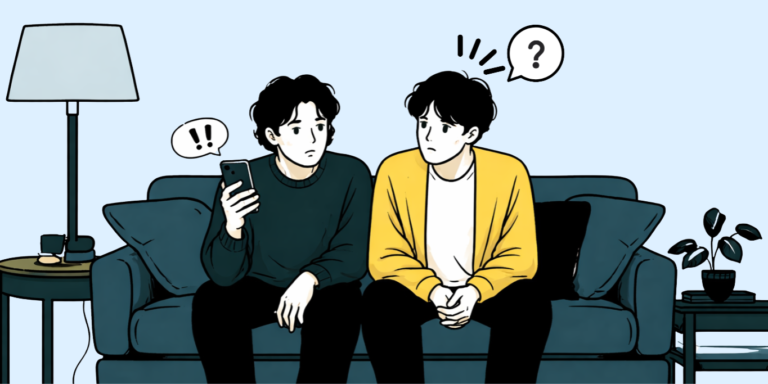


People who experience scams rarely see themselves as careless or naive. Most are responding to pressure, uncertainty, or emotional strain in ways that are psychologically predictable.
Based on their characteristics and cognitive patterns, the scam victims can be categorized into 6 profiles that explain how different thinking styles become vulnerable under stress. These profiles illustrate why deception can affect even cautious, experienced, and well-educated individuals.
Although the profiles differ in coping styles and thought patterns, they share a core vulnerability: intuitive thinking tends to override deliberate reasoning at critical moments.
Understanding these patterns helps individuals recognize their own responses and build preventive strategies to minimize the risk of harmful consequences.
Dual Process Theory and Thinking Traps in Scam Vulnerability
This framework draws on Dual Process Theory1, which explains that decision making operates through two systems.
- System 1 (Fast Thinking) is quick, intuitive, and automatic. It relies on mental shortcuts, such as immediately associating a luxury brand logo with high value.
- System 2 (Slow Thinking) is deliberate and analytical. It becomes active when a person pauses to evaluate information, compare options, or verify details.
Both systems are normal, but the brain tends to rely more on System 1 because it uses less energy. Under emotional pressure, urgency, fear, or cognitive strain, reliance on fast thinking increases. Emotional arousal can also activate the amygdala, further reducing reflective control.
When System 2 becomes less accessible, people find it harder to pause, verify, or consider alternatives. The six victim profiles reflect different thinking traps that emerge under these conditions. Clinically, psychiatrists and psychologists understand these patterns as coping styles or psychological features, not failures of intelligence or character.
Understanding the Six Victim Profiles
Despite their differences, all six profiles describe situations in which individuals rely more on intuition than reflection when under pressure. This shared reliance increases vulnerability, not because of low intelligence, but because the mind prioritizes speed, relief, or emotional regulation over careful analysis. Recognizing this common mechanism helps shift the focus away from blame and toward understanding.
1. The Overconfident Thinker: This profile reflects strong trust in personal judgment and past success. Individuals feel capable of detecting problems and therefore engage less in deliberate checking. Confidence reduces the perceived need to activate System 2 thinking, increasing exposure to error when conditions change.2
2. The Emotional Responder: This profile is shaped by strong emotional reactions such as fear, hope, guilt, or excitement. Emotional arousal accelerates intuitive responses and weakens reflective reasoning.3 Decisions are often made to reduce emotional discomfort rather than to evaluate accuracy or long term risk.
3. The Trusting Connector: This profile values relationships, familiarity, and social harmony. Messages that feel personal, warm, or socially endorsed are experienced as safe.4 Trust becomes an emotional shortcut, reducing the motivation to question or verify information.
4. The Risk Taker: This profile is driven by curiosity, novelty, or perceived opportunity. Attention is drawn to potential gains, while risks feel distant or manageable. Intuitive thinking dominates as the possibility of reward outweighs caution.5
5. The Isolated Seeker: This profile reflects social isolation or limited support. Digital interactions may provide comfort or a sense of being understood.6 Without regular external feedback, intuitive judgments are less likely to be challenged, allowing harmful situations to persist.
6. The Overloaded Mind: This profile operates under stress, fatigue, or high cognitive demand. When mental resources are depleted, deliberate reasoning becomes harder to access. People rely on quick decisions and surface cues to cope with overload.7
Recommendations for the Public:
From a professional perspective, individuals can use psychotherapeutic approaches to slow impulsive reactions to digital offers or threats. These approaches focus on creating space between emotional triggers and decision-making.
1. Mindfulness Based Practices: Mindfulness based practices help individuals notice thoughts, emotions and bodily reactions as they arise. Mindfulness is not a religion but a psychological technique also used in Buddhism, and its key effect is to support System 2 slow thinking. By observing thoughts and emotions instead of reacting, a brief mental pause is automatically created that allows the prefrontal cortex, responsible for self-control, risk evaluation, and deliberate decision making, to re-engage when fast thinking dominates, reducing emotional hijack and supporting more reflective judgment before action.
Real Life Application: Receiving a LINE message claiming that a bank account will be frozen can trigger immediate fear and urgency. Pausing to notice the fear instead of clicking the link allows time to shift out of fast thinking and verify the message through official bank channels.
2. Cognitive Behavioural Therapy and Socratic Questioning: CBT focuses on examining thoughts rather than reacting to them. Using Socratic questioning, individuals test whether an automatic thought is actually true. Questions such as “What evidence do I have?” “Is there another explanation?” or “What would I advise a friend?” help shift thinking from fast emotional reactions to slower reflective reasoning. This process strengthens System 2 thinking and reduces the influence of fear, excitement, or urgency. Scams often succeed by blocking this step through emotional pressure or secrecy, so rebuilding the habit of questioning thoughts is protective.
Real Life Application: An online job post promises very high pay with little effort and urges immediate action. Instead of acting on excitement, pause and ask, “Do easy, high-paying jobs like this usually exist?” or “Why am I being rushed?” Try to verify by checking other sources or asking a trusted person. Scammers often insist, “Do not tell anyone
3. Conditions related to impulsivity, such as bipolar disorder, adult ADHD, or gambling disorder, can increase vulnerability to manipulation. In psychological terms impulsivity can be understood as a state where the brain has brakes but they are not working effectively a form of brake failure caused by reduced inhibitory control or emotional hijack. In this state, actions occur before reflective evaluation. Recognizing personal patterns of impulsiveness and using external controls helps compensate when internal regulation is weakened.
Real Life Application: Individuals who notice impulsive decisions around money or online offers may ask a trusted family member to review important messages before responding. This external check functions as a temporary brake when self-control feels unreliable.
- Giada Gronchi, Aron K. Barbey, and Fabrizio Giovannelli, “Dual-Process Theory of Thought and Inhibitory Control,” Frontiers in Psychology 15 (2024): 1459844, https://doi.org/10.3389/fpsyg.2024.1459844. ↩︎
- Christopher F. Chabris and Daniel Simons, The Invisible Gorilla: How Our Intuitions Deceive Us (New York: Crown, 2010), 8–12. See also: “Overconfidence and Decision-Making in Financial Fraud,” Journal of Economic Psychology 82 (2024): 102–105. ↩︎
- George Loewenstein, “Out of Control: Visceral Influences on Behavior,” Organizational Behavior and Human Decision Processes 65, no. 3 (1996): 272–292. ↩︎
- Timothy R. Levine, Duped: Truth-Default Theory and the Social Science of Lying and Deception (Bloomington: Indiana University Press, 2019), 112–115. ↩︎
- Tali Sharot, “The Optimism Bias,” Current Biology 21, no. 23 (2011): R941–R945. ↩︎
- Monica T. Whitty, “The Scammers Persuasive Techniques Model (SPTM),” British Journal of Criminology 53, no. 4 (2013): 665. ↩︎
- Giorgio Gronchi et al., “Dual Process Theory and Stress: The Impact of Cognitive Load on Intuitive and Deliberate Decision-Making,” Frontiers in Psychology 15 (2024): 1354. ↩︎